ARBEITSSCHUTZdigital
  • Kontakt
  • |
  • Impressum
  • |
  • Hilfe
  • |
  • Mediadaten
  • |
  • Suche über alles
Hilfe zur Suche
Ihr Warenkorb ist leer
Login | Registrieren
Sie sind Gast
  • Startseite
    • Nachrichten
    • Kurzporträt
    • Mediadaten
  • Themen
    • Gefährdungsbeurteilung
    • Arbeitsmittel und Anlagen
    • Arbeitsstätten
    • Brand- und Explosionsschutz
    • Chemikalien und Gefahrstoffe
    • Biologische Arbeitsstoffe
    • Gefahrgut und Logistik
    • Produktsicherheit/Medizinprodukte
    • Strahlenschutz
    • Immissionsschutz
  • Arbeitshilfen
    • Aushänge und Checklisten
    • Dokumentationshilfen
    • Formulare
    • Mustervorlagen
    • Betriebsanweisungen
  • Recht & Regeln
    • DGUV Regelwerk
      • Vorschriften
      • Regeln
      • Informationen
      • Grundsätze
    • Alle Vorschriften
      • der letzten 3 Monate
      • der letzten 6 Monate
      • des letzten Quartals
      • des laufenden Jahres
      • des vergangenen Jahres
    • Alle Erläuterungen
    • Mein Rechtskataster
    • Änderungen im Vorschriften- und Regelwerk
  • Medien
    • Newsletter
    • Infodienst
    • Neu auf
    • eJournals
    • eBooks
  • Stellenmarkt
  • Bestellen

Newsletter

Stets auf dem Laufenden   mit dem kostenlosen Newsletter
ARBEITSSCHUTZuptodate!

Social Media

Twitter Facebook

ARBEITSSCHUTZ digital

ist ein Angebot des

Erich Schmidt Verlag GmbH & Co. KG
  • Schreiben Sie uns!
  • Seite empfehlen
  • Druckansicht
EU-OSHA News  
26.01.2026

Nearly half of EU workers probably exposed to cancer risk factors

ESV-Redaktion Betriebssicherheit/EU-OSHA
Nearly half of European workers are probably exposed to cancer-causing agents at work. (Foto: BlossomadventuresLA/Pixabay)
The final overview report of The Workers' Exposure Survey (WES) covering 98.5 million European workers, provides the most comprehensive data so far on workers' probable exposure to 24 known cancer risk factors across six EU Member States: Germany, Ireland, Spain, France, Hungary, and Finland. The latest report highlights that 46.6 million workers faced exposure to one or more of the cancer risks during their most recent week at work.

Exposure rates and worker disparities
  • The most common exposures are to solar ultraviolet radiation, diesel engine exhaust emissions, benzene, respirable crystalline silica, and formaldehyde.  
  • Unlike exposure to other industrial chemicals, exposure to formaldehyde is more widely distributed among the working population, with 6.4% of all workers probably exposed. The circumstances of this exposure are quite diverse, for example when working with glue or plywood, during firefighting, or opening shipping containers.
  • Wood dust exposure stands out among cancer risk factors in the survey: half of affected workers experienced high-level exposure during the past working week, representing 1.6% of all workers.
  • About 11.1% of workers are exposed to at least one of the 24 substances at a high level.  
  • Multiple exposures are also common: 26.1% of workers were probably exposed to at least two cancer risk factors within the same week.
  • Older workers tend to have higher exposure to multiple risk factors, but at lower levels compared to other workers.
  • Self-employed and temporary workers often face higher exposure rates, while exposure patterns also differ between men and women depending on the sector and type of work involved.

William Cockburn, EU-OSHA’s Executive Director: “Nearly half of European workers are probably exposed to cancer-causing agents at work, and millions face high levels of risk or multiple exposures. Every year, more than 100 000 people in the EU lose their lives to work-related cancer. These findings reveal significant gaps in prevention and an urgent need for targeted, evidence-based interventions to protect workers' health and reduce the burden of occupational cancer across Europe.”

Control measures and prevention gaps

The survey, conducted between September 2022 and February 2023, shows important differences across sectors, job types, and demographic groups, underlining the importance of targeted interventions and policies.  

WES also examines how workplaces manage exposure risks. The use of control measures such as ventilation, enclosed systems, and personal protective equipment varies widely. Some sectors, including chemical laboratories, report consistent use of technical controls. In many others, controls are used only occasionally or not at all. For example, more than two-thirds of workers exposed to diesel engine exhaust emissions during vehicle maintenance reported not taking protective measures.

These findings highlight the need for improved and more consistent implementation of technical, organizational, and personal protective measures, following the established hierarchy of prevention.

Informing policy and action

The WES data provide robust and comparable evidence to support policy development and workplace prevention strategies. EU-OSHA has actively contributed to the European Commission’s ongoing process to update EU legislation on carcinogens, mutagens, and reprotoxic substances at work, which began several years ago and continues today. Our research underpins this legislative work, and the survey findings will inform possible future amendments. They also support the goals of the EU Strategic Framework on Health and Safety at Work 2021-2027, Europe's Beating Cancer Plan, and the EU Roadmap on Carcinogens.

Effective prevention strategies must consider the different types and levels of exposure experienced by diverse groups of workers. Sector-specific and worker-centered approaches are essential to reduce risks and protect health.

Access the findings
  • Overview report: Occupational cancer risk factors in Europe - Overview of the findings of the Workers' Exposure Survey
  • Summary: Occupational cancer risk factors in Europe - Overview of the findings of the Workers' Exposure Survey
  • Thematic section: Workers' Exposure Survey on cancer risk factors in Europe
About the survey
The Workers' Exposure Survey (WES) is a large-scale, population-based telephone survey carried out between September 2022 and February 2023 in six EU Member States. It estimates the probable exposure of workers to 24 known cancer risk factors, including industrial chemicals, process-generated substances, mixtures, and physical agents.
WES uses the Occupational Integrated Database Exposure Assessment System (OccIDEAS) tool and provides weighted data representative of 98.5 million workers.
Earlier WES publications include short and technical reports, a methodology report, a topic-related report on healthcare workers, and several flyers.
Occupational cancers are the leading cause of work-related deaths in the EU, responsible for more than 100 000 fatalities every year, as recognised in the EU Roadmap on Carcinogens.
More information is available at https://osha.europa.eu.

Quelle: Pressemitteilung EU-OSHA

Das könnte Sie auch interessieren:


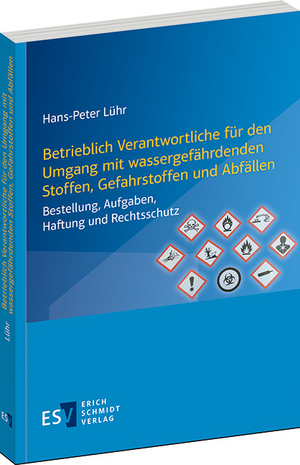
Betrieblich Verantwortliche für den Umgang mit wassergefährdenden Stoffen, Gefahrstoffen und Abfällen

Autor: Prof. Dr.-Ing. Hans-Peter Lühr

Programmbereich: Umwelt- und Klimaschutz

Gefahrstoffe im Griff

Wie Sie beim Umgang mit wassergefährdenden Stoffen, Gefahrstoffen und Abfällen mögliche Gefährdungen für die Beschäftigten rechtssicher beurteilen und gegensteuern, erfahren Sie in diesem Buch aus erster Hand.

Mit Fokus auf die Funktion und die spezifischen Aufgaben der betrieblich Verantwortlichen in den Unternehmen stellt Ihnen der Sachverständige Prof. Dr.-Ing. Hans-Peter Lühr, der u.a. seit über 30 Jahren als Auditor für Qualitätsmanagementsysteme tätig ist, alles Wichtige mit vielen Beispielen zusammen:

  • Relevante Vorschriften des Arbeitsschutzes, des jüngst novellierten Gefahrstoffrechts und weiterer einschlägiger Regelungen
  • Ermittlung der Gefahren als Grundlage für die Erstellung von Gefährdungsbeurteilungen
  • Gute betriebliche Praxis bei der Beschaffung von stoffbezogenen Daten, der Führung von Gefahrstofflisten, dem Transport von Gefahrstoffen und der Umsetzung von Dokumentationspflichten

Gefahrstoffe 27.11.2025
Nächster Meilenstein im PFAS-Beschränkungsverfahren erreicht
Die Überarbeitung des Hintergrunddokuments im Rahmen des PFAS-Beschränkungsverfahrens ist nun abgeschlossen. Die dossiereinreichenden Behörden der fünf Länder (Deutschland, Niederlande, Norwegen, Dänemark und Schweden) haben die Rückmeldungen aus mehr als 5.600 Kommentaren berücksichtigt. mehr …
  • Kontakt
  • |
  • Impressum
  • |
  • Datenschutz
  • |
  • Cookie-Einstellung
  • |
  • AGB
  • |
  • Hilfe

Die Nutzung für das Text und Data Mining ist ausschließlich dem Erich Schmidt Verlag GmbH & Co. KG vorbehalten. Der Verlag untersagt eine Vervielfältigung gemäß §44b UrhG ausdrücklich.
The use for text and data mining is reserved exclusively for Erich Schmidt Verlag GmbH & Co. KG. The publisher expressly prohibits reproduction in accordance with Section 44b of the Copy Right Act.

© 2016 Erich Schmidt Verlag GmbH & Co. KG, Genthiner Straße 30 G, 10785 Berlin
Telefon: +49 30 25 00 85-0, Telefax: +49 30 25 00 85-305 E- Mail: ESV@ESVmedien.de
ESV.info        IFA-Arbeitsmappe        IFA-Handbuch        UMWELTdigital

Wir verwenden Cookies.

Um Ihnen ein optimales Webseitenerlebnis zu bieten, verwenden wir Cookies. Mit dem Klick auf „Alle akzeptieren“ stimmen Sie der Verwendung von allen Cookies zu. Für detaillierte Informationen über die Nutzung und Verwaltung von Cookies klicken Sie bitte auf „Anpassen“. Mit dem Klick auf „Cookies ablehnen“ untersagen Sie die Verwendung von zustimmungspflichtigen Cookies. Sie haben die Möglichkeit, Ihre Einstellungen jederzeit individuell anzupassen. Weitere Informationen finden Sie in unserer Datenschutzerklärung.


Anpassen Cookies ablehnen Alle akzeptieren

Cookie-Einstellungen individuell konfigurieren

Bitte wählen Sie aus folgenden Optionen:


zurück